5 Myths About Homeschooling.

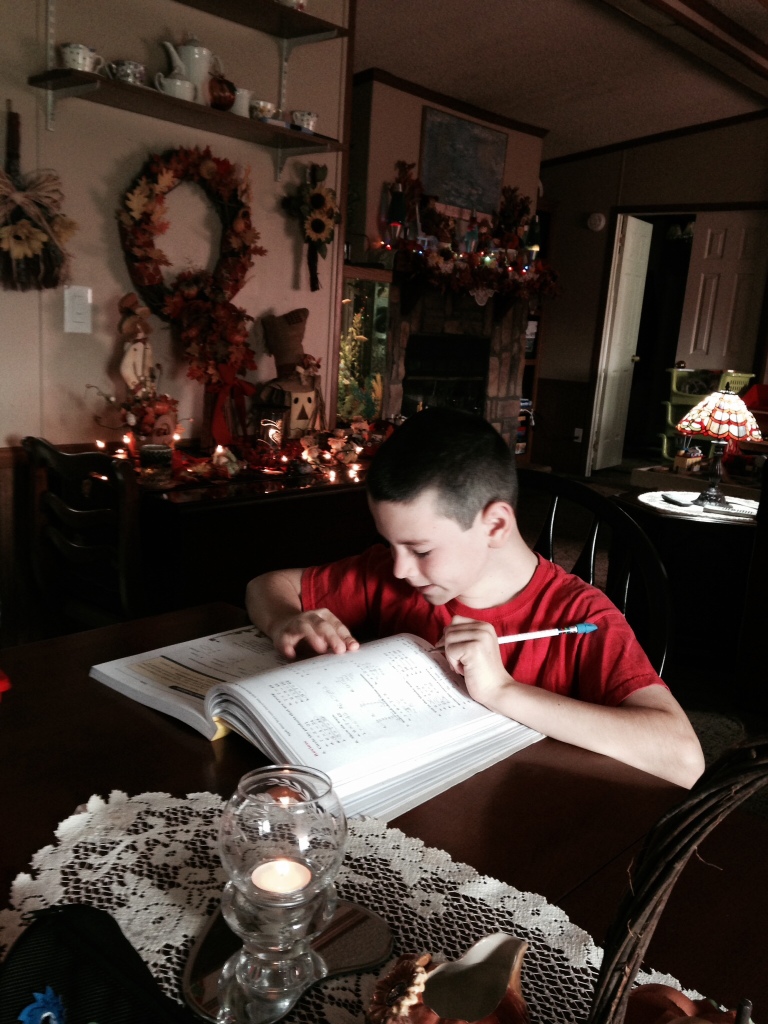
My students completing a consumer mathematics assignment.

In this post, I will separate myths from facts regarding homeschooling. Like other topics within academic spheres, homeschooling is rife with false information, which leads to misinformation, harmful stereotypes, and stigmas. When remote learning became mandatory during the COVID-19 pandemic, homeschooling experienced a Renaissance, as homeschooling families received admiration for success in educating students at home. However, as remote learning has been stigmatized due to the effects on the students, homeschooling again suffers from these stereotypes. Homeschooling is not for everyone; it’s an academic path chosen on behalf of the parents after much contemplation and intent.

Myth 1. Homeschool Students Are Not Properly Socialized:

The subject of socialization is the most common stereotype associated with homeschooling. Homeschool students have more opportunities for socialization due to flexible schedules. Additionally, many students are members of homeschool co-ops, which offer socialization events such as prom, family events, and graduation ceremonies like their public school counterparts.

Unlike public school students who are socialized horizontally, homeschool students are socialized vertically. The homeschool environment allows students to relate to students older and younger than themselves, forming social bonds generally not accounted for in the public school setting. My students can relate to adults and students in lower grades, preparing them for the adult world and the relationships they will encounter in the work environment.

People often comment on my student’s mature behavior and disposition in public. They recognize something different about them that sets them apart from other young adults their age. Structured verticle socialization allowed by homeschool education forms much of this polished behavior.

Don’t let this negative stereotype affect your decision to homeschool your students. Misinformation embodied by family members, friends, and significant others will see the positive benefits of verticle socialization.

Myth 2. Homeschool Students Don’t Have An Academic Schedule:

Academic complacency is another common misunderstanding about homeschooled families and students portrayed by public opinion. Homeschooling parents take academics very seriously and seek resources helping to lead their students to success. Public schools are not perfect institutions; mass education is not for every student. As parents, we can meet our students on their level and adapt subject material specifically to their learning styles. Reaching students where they are leads to academic success and paves the way for an education that will benefit them far into the future.

My oldest student sitting in the cockpit of a CRJ on our homeschool educational trip to Washington, D.C.

Our academic day was very structured; school began at 9:00 a.m. and ended by 3:00 p.m., Monday through Thursday. I reserved Friday for educational videos and nearby field trips. All subject material was completed during class time, eliminating the need for homework and allowing my students free time for the remainder of the day. Because there is less time wasted in homeschooling, our school day does not require the need for homework.

Myth 3. Homeschool Students Cannot Go To College:

Disqualification from higher education is one of the biggest myths about homeschool education. Not only are homeschooled students eligible to attend universities, they are independent learners and make better students. Accredited umbrella programs provide official high school diplomas accepted by major universities and academic programs, providing homeschooled students the same opportunities as public school students.
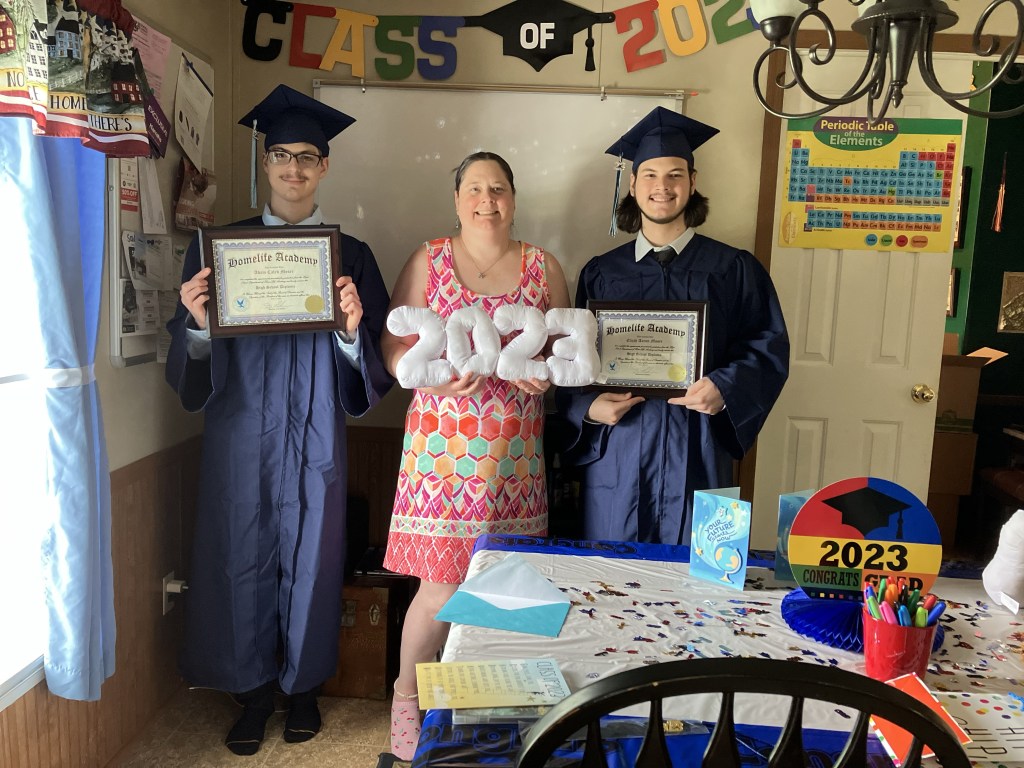
My student’s with their High School Diplomas.

Myth 4. Homeschooling Is Only For Religious Families:

Not true. The most common reason parents homeschool their children is the negative institutionalized environment of the public school setting. The desire for religious education is second, followed by individualized instruction tailored for the student. Surprisingly, many religions prefer secular homeschool curriculums and integrate their values into lessons when appropriate.

For example, we are a non-religious family and homeschool our children via a secular curriculum and programs. While many homeschool co-ops are faith-based, homeschooling is not just for religious families.

Myth 5. Homeschool Kids Cannot Play Sports Or Partifipate In Extracurricular Activities:

Many parents do not know that local school boards are required by law to allow homeschoolers to participate in public school sports, music programs, or other after-school activities. Additionally, many community programs welcome homeschoolers to play in recreational leagues, martial arts, and other community service projects. My students, who participate in Karate, currently hold a Brown Belt and will be promoted to Black Belt this fall.

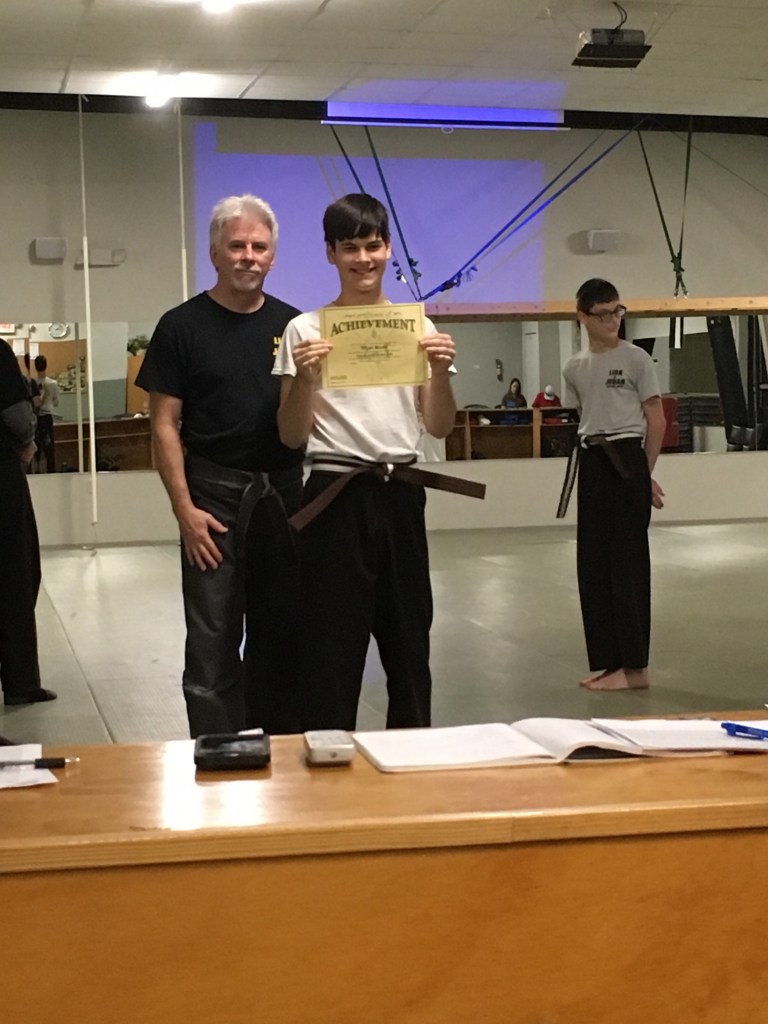
Homeschooling is more than an education but a lifestyle. As a homeschooled family, we make education our focus in ways that are beyond the textbook. Errands and grocery shopping can be a teaching opportunity as we prepare our students for life. Anything can be a teaching opportunity; all you need to do is look and encourage a sense of wonder in your students.

In addition to being an accomplished homeschooling mom, I am a published author, multi-disciplinary writer, and website content creator. If you like this post, please visit my writing portfolio of work and other blogs.

The Works of Noelle K. Moser-Writing Portfolio

Coffee and Coelophysis – A blog about Dinosaurs!

The Kuntry Klucker – A blog about keeping backyard chickens.

~ Noelle K. Moser ~

Homeschooling, A Student’s Perspective

After the conclusion of our homeschooling journey, I asked my students to reflect on their education and list several things they appreciated and enjoyed about being homeschooled. This post is their perspective as homeschooled students and its benefits.

1. Not having to catch an early morning school bus.

The bus route for the public school in our area comes by our house at 6:10 am, and the students riding the bus are at the bus stop no later than 6:00 am. For an adult, that is early. For a child, to be ready for the bus to arrive shortly after 6 am is a challenge. My students greatly appreciated not having to structure their morning to be prepared to catch the bus.

2. Feeling well rested.

Our homeschool day began at 9:00 am. Before school, my students had to complete morning chores that involved feeding the chickens and cleaning coops, making up their beds, eating breakfast, brushing their teeth, and getting dressed. To complete their task list, my students set their alarms for 7:30 am, a later wake-up time that allowed them to feel well-rested and ready for the day. As a parent, I noticed they were much more alert and attentive, given the extra rest.

3. Not having to deal with bullies.

Homeschooling removed my students from the public school environment and eliminated many childhood trials that many students face. With the arrival of social media, cyberbullying is just as damaging and impactful on a student’s ability to concentrate and learn. My students recognized this benefit and found a reprieve from not having to face this issue.

4. No overwleming amounts of homework.

The homeschool environment allows students to complete most tasks during class time and reduces the need for large amounts of homework. Classwork not completed during class can be tabled for the following school session. The ability to work at the student’s learning level further eliminated the need for homework. My students greatly appreciated this aspect of homeschooling. While many of their friends had large amounts of schoolwork, my students were free after our school day.

5. Having a flexible schedule.

One of the benefits of homeschooling is the inherent flexibility to roll with the punches and seize opportunities as they arise. In the event of an unexpected circumstance, we could accommodate it without much warning or planning. If our library hosted an event we wanted to attend, we adjusted our homeschool schedule to participate. My students greatly appreciated the flexibility in our homeschool schedule to make time for events that interested them.

6. Having time to pursue hobbies and interests.

Eliminating the need for homework and shorter school day allowed my students more free time to pursue hobbies and interests. My students voiced their appreciation for this aspect of homeschooling and the free time and flexibility to create time to learn things separate from academic coursework. This free time to explore leads them to passions they plan to pursue in their occupations and further education. Students allowed to explore subject matter on their terms positively impact their career path, and facilitate self-teaching, with individual growth. Missing in many public school settings, this aspect of personal growth sets homeschool students apart from their peers in ways that benefit homeschool students.

My students learning about the motions of the moon with Planet Buddies in a familiar low-stress environment.

7. Low-stress environment

Structured in a familiar and comfortable environment homeschooling reduces stress and facilitates clarity and the ability to focus. As my students advanced in academics, they appreciated this low-stress mode of education and the ability to focus on their academic goals. Homeschooling allows students to learn in an environment where they feel safe and can nurture the desire to learn.

8. The ability to learn difficult subjects at one’s preferred learning pace.

As we entered high school and subject material became difficult, my students were able to learn challenging academic material at their own pace. In the public school setting, students cannot afford this latitude. However, in the homeschool setting, students can gauge their learning style and speed tailored for them. Subjects such as Chemistry and advanced math homeschooling allow my students to take their time with concepts before moving forward. This pace-appropriate learning style removes much of the frustration students experience with these advanced subjects.

9. Three-day weekends

As a homeschool educator, I can create a lesson plan that works with our family dynamic. I structured our academic year on a four-day schedule with a three-day weekend. I taught classes Monday through Thursday, taking Friday, Saturday, and Sunday as a weekend. We worked hard for four days, reserving the weekend for social activities and participating in functions we wanted to attend. My students appreciated this schedule because it allowed them time to participate in activities they were interested in and allowed us a long weekend for relaxation. Many school systems are beginning to adopt this four-day-a-week school plan as the benefits are numerous.

10. Three-month summer vacation.

Quite possibly, my student’s favorite part of homeschooling was the three-month-long summer vacation. I worked my students hard during the school year. I used the summers to plan next year’s classes, curriculums, and lesson plans. I wrote most of the curriculums for my students much of my preparation time was best utilized during June, July, and August. Their peers and friends started school at the end of July, but we did not start till the beginning of September. Shopping for school supplies did not signify the beginning of the school year but rather the midway point of our summer. My students used the summers to participate in library reading programs and work on many of their interest areas. Although extended, our summers were productive and facilitated the coming homeschool academic year.

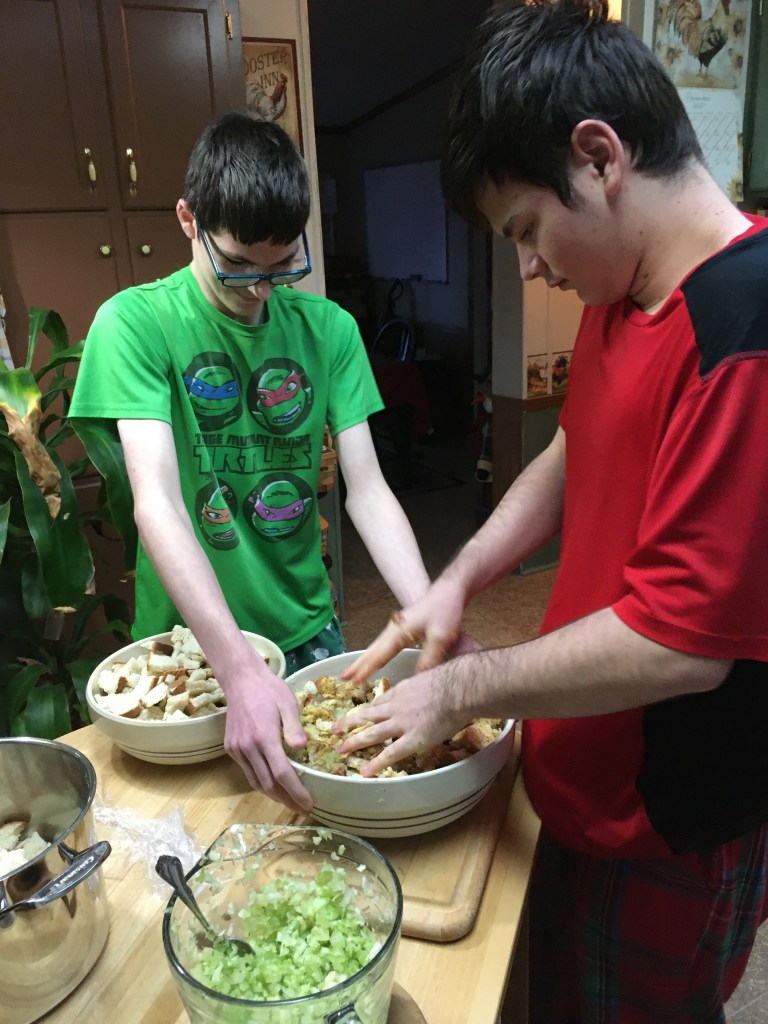
My students preparing stuffing for the Thanksgiving turkey.

Homeschooling is more than an education plan but a lifestyle. As a homeschooled family, we make education our focus in ways that are beyond the textbook. Family vacations have an educational component as we tour museums or stop and take in fascinating geological features. Family game night focuses on various aspects of education or life skills. Errands and grocery shopping can be a teaching opportunity as we prepare our students for life. Anything can be a teaching opportunity; all you need to do is look and encourage a sense of wonder in your students.

Using grocery shopping as a teaching opportunity to teach my students important life skills.

In addition to being an accomplished homeschooling mom, I am a published author, multi-disciplinary writer, and website content creator. If you like this post, please visit my portfolio of work and other blogs.

The Works of Noelle K. Moser – writing portfolio

Coffee and Coelophysis – A blog about dinosaurs!

The Kuntry Klucker – A blog about the adventures in keeping backyard chickens.

Why Homeschool?

As parents, we face many important decisions in the lives of our children. One of the most crucial to their development and transition into adulthood is their education. Thankfully we live in a country where parents have options.

No one knows a child better than the parents. As parents, we are acquainted with our child’s personality, strengths, and weaknesses. Some children are natural mechanics others are natural scientists, writers, or actors. Parents want to harness and nurture these special abilities. There is no better way to help our children grow than through their education.

As parents, we have to make a very important decision on the educational path for our children. There are many paths available public school, private school, military school, boarding school, charter schools, and homeschool.

In this blog, I will detail my experience as a homeschooling parent. My students will be seniors next year. I have been down this path and hope to help others who are just starting their educational journey.

Let me start by sharing with you how my journey began. When my first son was born, I loved showing him things in the world around him. Things like colors, animals, objects, and reading. The delight I would see in his eyes when he made the connection was magnetic. I dreaded the day that I would have to send him to school, no longer sharing these learning experiences with him.

A year later, my second son was born. Although just as curious about the world around him, my second son did not care so much for repeating colors, animals, and objects. Rather he was independently drawn to letters, numbers, and books. He was a delayed speaker, not talking till about the age of 4. By the age of 3, he knew how to work a calculator, write letters, and read.

When I arranged to play dates, he was not interested in playing with other children or toys, he was happiest when he was reading. At one of his doctor appointments, I presented this to his physician. After visiting a few specialists, it was determined that he was Autistic, specifically Aspergers Syndrome. Although technically on the autistic spectrum, he was high functioning.

On cognitive tests and intellectual tests, he was off the charts for children his age. But on social assessments, he struggled. He was unable to “go with the flow” or able to adapt to a change of plans without a lengthy prior warning.

Intellectually he was labeled as “gifted” but socially he was unable to conform. Knowing the public schools in my area, this meant one thing. Special Education.

Being unable to conform to the mainstream schedule of a normal day, this would present problems. He was undoubtedly intellectually gifted but could not be placed with the mainstream students; intellectually detrimental.

As I began to look for options for his education, homeschooling began to appear on my radar. I assumed that my children would attend school like many other children.

I dug deeper into the possibility of homeschooling. While my children were still toddlers I did research. Fortunately, after spending many years at University pursuing several degrees, deep research was no stranger to me.

I spent several years researching. Finally, I derived an education path for my children. In my state of Tennessee, I have to inform my local school board that my children will be homeschooled. I only need to provide proof of attendance and meet the mandatory 180 days of instruction per school year. In some cases, an umbrella school will take upon this task, freeing me of the task of any contact with my local school board.

Deciding to homeschool my children, I began laying the groundwork early. While they were still 4 and 5, I began to make education a part of our daily schedule. I turned their play time into a time for teaching; counting, writing, coloring, and so forth. By the time I started kindergarten, they were working at a first-grade level.

Another decision I made was when to officially enroll my younger son in homeschooling. Before I made this decision, I sought the counsel of his doctor, speech therapist, and several homeschool counselors. The consensus determined that holding him back due to his age would be intellectually determental. This meant my boys would be in the same grade. I assumed that at some point they would naturally diverge when we encounter the harder math. But to my surprise, next year I will have two senior students. Both my students are working at a college level in several subject.

My departure into homeschooling was unconventional. I did not plan on educating my children at home. I was presented with circumstances requiring a different direction to education.

I have more homeschool days behind me than in front of me, I can honestly say it has been an honor to homeschool, my children. It has been a long road, one that yielded many memories and treasures. The most meaningful aspect is watching them learn. Without homeschool, I would have missed all these precious moments in their education.

Now that my homeschooling journey is nearing its end, I want to help others who are just starting. In the posts following, I will share with you the knowledge gained through this experience.

In addition to homeschooling, I am a published author, multi-disciplinary writer and blog contributer. If you like this blog, please visit my portfolio of work.

The Works of Noelle Moser

If you like this post, please tap the subscribe button. As always, thanks for reading. See you next time.

Welcome to Chicken Math University, pleased to meet you.

Noelle